Hey everyone! Are you staring up at your old, dusty ceiling lights, dreaming of something brighter, sleeker, and a whole lot more energy-efficient? I totally get it.
I recently decided it was time to upgrade my home office and kitchen with modern LED panel lights, and let me tell you, it was an absolute game-changer!
The uniform, brilliant glow transformed the entire vibe of the rooms, making everything feel fresh and inviting, not to mention the happy surprise when my electricity bill arrived.
We’re living in an incredible era where smart home technology is seamlessly integrating into every aspect of our lives, and lighting is definitely leading the charge.
LED panel lights aren’t just about cutting down on energy costs anymore; they’re becoming a cornerstone of creating truly dynamic, personalized living spaces, often connecting right to your smart assistant for effortless control.
You might be thinking that installing these beauties sounds like a daunting task, something best left to a pricey professional. But I’m here to tell you, based on my own experience, that with a clear plan and the right approach, it’s a perfectly achievable DIY project for just about anyone!
I’ve been down that road, staring at a ceiling full of wires, feeling a little overwhelmed. But after tackling a few installations myself, I’ve picked up some invaluable tips and tricks that I genuinely wish I had known from the start.
From understanding the difference between various wattages and color temperatures to the actual nitty-gritty of wiring, there’s a bit to learn. But don’t you worry, I’ve got your back on this one.
I’ll share all the ins and outs, my personal favorite tools, and some clever hacks to ensure your LED panel light installation goes smoothly and looks fantastic, giving you that professional finish without the professional price tag.
Let’s explore how you can brighten up your world and save some serious cash while you’re at it!
Demystifying the LED Panel Light Spectrum

Choosing the right LED panel light can feel a bit like decoding a secret language, especially with all the jargon thrown around. But trust me, understanding a few key terms will make all the difference in achieving that perfect ambiance you’re dreaming of.
When I first started looking, I was totally overwhelmed by lumens, kelvins, and wattage, wondering if I needed a degree in electrical engineering just to pick a light!
What I quickly learned is that it’s less about complex science and more about knowing what *you* want your space to feel like. For instance, my home office absolutely needed a crisp, bright light to keep me focused, while the kitchen benefited from something a little warmer, creating a more inviting feel for family meals.
It’s truly incredible how just changing the type of light can completely transform how a room feels, making it either a productivity hub or a cozy sanctuary.
I’ve heard so many friends express how much better they feel in their newly lit spaces, and I completely resonate with that sentiment. It’s not just about illumination; it’s about creating an atmosphere that genuinely enhances your daily life and mood.
Understanding Color Temperature (CCT)
One of the biggest eye-openers for me was understanding color temperature, measured in Kelvins (K). This isn’t about how *hot* the light is, but rather the *hue* it emits.
Lower Kelvin numbers (around 2700K-3000K) give you a warm, yellowish glow, much like traditional incandescent bulbs. This is what I gravitated towards for my kitchen, as it makes the space feel so welcoming and cozy, perfect for evening gatherings.
On the flip side, higher Kelvin numbers (5000K-6500K) produce a cool, bluish-white light, ideal for tasks that require focus and alertness. This cool white is exactly what my home office needed to banish shadows and keep my eyes from straining during long work sessions.
I even have a friend who used a super cool white for their garage workshop, and they swear by how much clearer everything looks when they’re tinkering with projects.
It really is about matching the light to the activity.
Decoding Lumens and Wattage
Forget what you thought you knew about wattage from incandescent bulbs; with LEDs, wattage primarily tells you how much energy the light consumes, not necessarily how bright it is.
The real measure of brightness for an LED is lumens. More lumens mean more light output. For example, you might find a 15-watt LED panel producing the same amount of light as an old 100-watt incandescent bulb, which is just mind-blowing when you think about the energy savings!
When I was picking out lights for my spaces, I focused on lumens per square foot to ensure adequate illumination without overkill. It’s a bit of a balancing act; too few lumens and your room will feel dim and dreary, but too many can make it feel harsh and clinical.
I always recommend checking out a few online calculators or even just looking at recommendations for similar room sizes to get a good baseline. This little bit of research can save you a lot of headache (and potentially eye strain!) down the line.
Getting Your Gear Together: Tools for a Smooth Install
Before diving headfirst into any DIY project, especially one involving electricity, I’ve learned the hard way that preparation is absolutely key. There’s nothing worse than being halfway through a project, covered in dust, only to realize you’re missing a crucial tool.
It’s happened to me more times than I care to admit, resulting in frustrating trips to the hardware store and dragging the project out longer than necessary.
So, for your LED panel light installation, let’s get you squared away with the right equipment from the get-go. Trust me, having everything laid out and ready to go will make the whole process so much smoother and safer.
Think of it like cooking: you wouldn’t start baking without all your ingredients measured out, right? The same principle applies here, and it’s a habit I’ve cultivated that saves a ton of time and stress.
Essential Hand Tools You’ll Need
First things first, safety always comes first! Before touching any wires, make sure you have a reliable non-contact voltage tester. This little gadget is your best friend for confirming the power is truly off at the switch.
I never, ever skip this step; it’s a small investment for peace of mind. Beyond that, a good set of screwdrivers (Phillips and flathead) is indispensable, especially if you’re dealing with existing fixture removal or new junction box covers.
Wire strippers and cutters are also non-negotiable for making clean, secure connections. For those who might be working with plaster or drywall, a utility knife or even a jab saw could come in handy for making neat openings for your panels, although many panels fit standard openings.
I personally swear by a sturdy step ladder – trying to balance on a wobbly chair is just asking for trouble, and trust me, I’ve seen (and almost been) there!
Specialized Equipment and Safety Gear
While most of the installation is pretty straightforward, some items are worth a special mention. Depending on the type of LED panel you choose (recessed, surface mount, or suspended), you might need specific mounting brackets or suspension kits, so make sure those are included or purchased separately.
A drill with appropriate bits will be helpful for pilot holes or securing mounting plates firmly into ceiling joists or drywall anchors. And let’s not forget the cleanup!
A shop vac is fantastic for quickly sucking up any dust or debris created during the process, keeping your space tidy. As for safety gear, in addition to the voltage tester, always wear safety glasses to protect your eyes from falling debris, especially when looking up at the ceiling.
And good work gloves can save your hands from minor scrapes and splinters. Taking these precautions not only protects you but also contributes to a more efficient and professional-looking final result.
Pre-Installation Prep: Don’t Skip These Vital Steps!
Alright, before we even *think* about touching wires or drilling holes, we need to talk about proper preparation. This stage is absolutely crucial, and honestly, it’s where most DIY mishaps happen if you rush through it.
I learned this the hard way on my very first lighting project – I was so eager to see the new lights up that I totally skimped on the planning, and let’s just say, the results were…
less than ideal. A wonky alignment here, a flickering light there, and suddenly, my “quick upgrade” turned into a frustrating do-over. So, take it from someone who’s been there: a little planning upfront saves a massive headache down the line.
It ensures not only a beautiful outcome but also a safe and efficient installation process, making you feel like a true pro.
Powering Down and Confirming Safety
This is, without a doubt, the most critical step. Seriously, don’t even think about starting until you’ve done this. Head straight to your electrical panel (usually in your basement, garage, or utility closet) and flip the circuit breaker that controls the lighting for the room you’re working in.
Don’t just rely on flipping the light switch in the room itself; that only controls one part of the circuit. Once you’ve flipped the breaker, go back to the room and double-check.
I always try to turn the light switch on and off a few times, just to be absolutely certain there’s no power flowing. Then, and this is where that non-contact voltage tester comes in, I use it on the existing light fixture wires to confirm there’s no juice.
Even if you *think* you’ve got the right breaker, testing with the voltage tester is the ultimate confirmation and could literally save your life. It’s a quick step that provides immeasurable peace of mind.
Mapping Out Your Layout and Measurements
Now for the fun part: visualizing! Before you make any cuts or put screws into your ceiling, carefully plan where each LED panel will go. For a single panel, it’s usually centered in the room, but for multiple panels, you’ll want them evenly spaced for uniform illumination.
I like to use painter’s tape to mark out the exact dimensions of each panel on the ceiling. This gives you a fantastic visual preview and helps you adjust the placement before committing.
Measure twice, cut once – this old adage holds particularly true here. Make sure your measurements for spacing are precise, and if you’re replacing existing fixtures, check if the new panels will cover the old opening neatly.
If not, you might need a trim kit or a little drywall patching. Thinking through these details beforehand will save you from staring up at a misplaced panel, wondering how you’re going to fix it.
This thoughtful layout also ensures you maximize the light distribution, avoiding dark corners and making your newly lit space genuinely glow.
Wiring It Up: Connecting Your New Luminaires
Alright, this is where some people start to get a little nervous, and I totally get it! Dealing with electrical wires can seem intimidating, but with the power off and a clear understanding of the basics, it’s a perfectly manageable step.
Think of it like connecting LEGO bricks – each piece has a specific place, and when they’re all together, they create something amazing. I remember my first time, my hands were a bit shaky, but after successfully connecting a few fixtures, that initial apprehension turned into confidence.
The most important thing here is to remain methodical and double-check every connection. Rushing through this part is a definite no-go, so take your time and follow the wiring instructions that come with your specific LED panel.
Every manufacturer might have slight variations, so always refer to their guide alongside these general tips.
Making Secure Electrical Connections
Typically, you’ll encounter three types of wires coming from your ceiling: black (hot), white (neutral), and sometimes green or bare copper (ground). Your new LED panel will have corresponding wires.
The general rule of thumb is “black to black, white to white, and ground to ground.” Before you start twisting, strip about half an inch of insulation from each wire end using your wire strippers.
Then, hold the corresponding wires together, ensuring the bare ends are aligned, and twist on a wire nut clockwise until it’s snug. A little tug on each wire connection will confirm it’s secure – you definitely don’t want any loose connections, as these can cause flickering or even be a fire hazard.
I always make sure the wire nuts are tight enough that I can’t pull the wires apart with gentle force. This step is crucial for both safety and the longevity of your lighting system, so don’t skimp on the security here.
Managing Wires and Power Supply
Once your connections are secure, you’ll need to neatly tuck the wires and any power supply (often called a “driver” for LED panels) into the junction box or the space above the ceiling.
Many LED panels come with an external driver that needs to sit freely in the ceiling void, while others have it integrated. Make sure the driver isn’t pinched or strained by the panel itself.
The key is to ensure nothing is obstructing the panel from sitting flush against the ceiling. I’ve found it helpful to gently fold the wires back into the box, pushing them towards the sides to create a clear central space for the panel.
If you have extra wire length, coil it neatly rather than stuffing it haphazardly. A well-managed wire system not only looks cleaner but also prevents potential damage to the wiring or the driver over time.
Remember, access might be needed again in the future, so keep things orderly.
Mounting Marvels: Securing Your Panel Lights
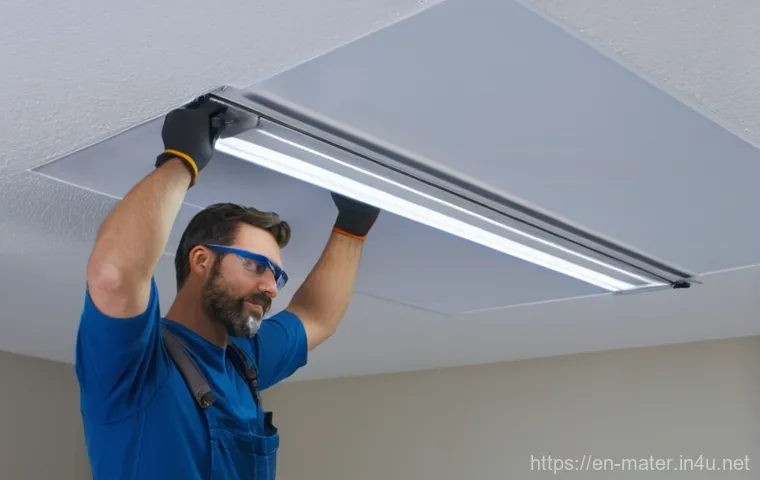
With the wiring neatly connected and safely tucked away, it’s time for the moment of truth: getting those beautiful LED panels securely into place! This part is incredibly satisfying because you really start to see your vision come to life.
Depending on the type of panel you chose – whether it’s recessed, surface-mounted, or even suspended – the installation method will vary slightly. But don’t fret; each method has its own straightforward approach.
I remember the thrill of finally seeing that crisp, even light fill my office after carefully recessing the panels. It felt like a magic trick, transforming a formerly dim space into a brilliantly lit hub of productivity.
The key here is precision and patience, ensuring everything is level and flush for that professional, high-end finish we’re all after.
Recessed Panel Installation Made Easy
Recessed LED panels are fantastic for a sleek, unobtrusive look. Most of these are designed to fit into standard ceiling openings (often 2×2 feet or 2×4 feet for larger commercial-style panels, or smaller rounds for residential spots), or you might need to cut a new opening using a template provided by the manufacturer.
After making sure your opening is the correct size, you’ll typically connect the panel’s driver to your household wiring. Then, many recessed panels come with spring-loaded clips on the sides.
You simply push these clips upwards, insert the panel into the opening, and release the clips. They’ll spring back down, gripping the inside of your ceiling drywall or grid to hold the panel securely in place.
I always give the panel a gentle wiggle after it’s in to ensure it’s firmly seated and perfectly flush. If it feels a bit loose, sometimes adjusting the clip position or making sure your ceiling cutout isn’t oversized can help.
Surface Mount and Suspended Options
For those who prefer not to cut into their ceilings or are working with solid ceilings like concrete, surface-mounted LED panels are a brilliant alternative.
These typically come with a frame that gets screwed directly to the ceiling surface, and then the LED panel slides into or clips onto this frame. The trick here is to ensure your mounting screws hit ceiling joists or use appropriate drywall anchors for a strong hold.
For my kitchen, I considered surface mounts because I wasn’t keen on making bigger holes, and they offer a really clean, modern aesthetic. Suspended panels, on the other hand, offer a more industrial or contemporary flair, often seen in open-concept spaces.
These use adjustable suspension wires that attach to the panel and then to anchors in the ceiling, allowing the panel to hang down. The most crucial part of suspended installation is making sure those ceiling anchors are robust enough to support the panel’s weight over time, and that the wires are leveled perfectly for an even hang.
Whichever method you choose, take your time to align everything; it makes all the difference in the final look!
| Color Temperature (Kelvin) | Light Appearance | Best Use Cases |
|---|---|---|
| 2700K – 3000K | Warm White / Soft White | Living Rooms, Bedrooms, Dining Rooms, Restaurants, creating a cozy atmosphere. |
| 3500K – 4000K | Neutral White / Cool White | Kitchens, Bathrooms, Offices, Garages, Retail Spaces, general task lighting. |
| 5000K – 6500K | Daylight / Bright White | Workshops, Basements, Art Studios, Hospitals, detailed task work, maximum alertness. |
Troubleshooting Common Hurdles (and How I Overcame Them!)
Even with the best preparation and the clearest instructions, sometimes things just don’t go according to plan. And you know what? That’s totally okay!
It’s part of the DIY journey, and honestly, figuring out how to fix a snag makes the final success even sweeter. I can tell you countless stories of a seemingly simple project turning into a head-scratcher.
One time, after meticulously installing a beautiful new LED panel in my guest bathroom, I flipped the switch, and… nothing. Just dead silence and darkness.
My heart sank, but instead of panicking, I took a deep breath and started troubleshooting. It’s those moments of problem-solving that build real confidence and expertise.
So, if you hit a bump in the road, don’t throw in the towel; chances are, it’s a common issue with a straightforward solution.
Lights Not Turning On? Here’s What I Check
First things first, if your light isn’t turning on, revisit the circuit breaker. Is it truly in the “on” position? Sometimes, a brief surge or a sensitive breaker can trip itself, even if you thought you had it off and then on again.
If the breaker is fine, then it’s time to re-check your wiring connections. Remember those wire nuts? Make sure they’re super tight and that there’s no loose wire strand peeking out or that the connection isn’t accidentally undone.
I’ve definitely had moments where I thought a connection was solid, only to find a wire had wiggled free. Also, don’t overlook the power supply (the driver) itself.
Sometimes, a faulty driver is the culprit, or it might just need to be reseated firmly into its connection points. Lastly, and this might sound silly, but double-check the light switch.
Is it wired correctly? Is it actually working? I’ve been fooled by a bad switch more than once, thinking the problem was with the fixture when it was simply a faulty control.
Flickering, Buzzing, or Uneven Light
These are often signs of specific issues, and once you know what to look for, they’re usually simple to fix. If your LED panel is flickering, it’s almost always a sign of a loose wire connection somewhere in the circuit, or sometimes, an incompatible dimmer switch.
LEDs require specific “dimmable” drivers and switches, so if you’re using an old incandescent dimmer, that could be your problem right there. A buzzing sound usually points to a problem with the driver – either it’s faulty, or it’s not the right type for your panel or electrical setup.
Uneven light, where some parts of the panel are brighter or dimmer than others, can sometimes indicate a minor manufacturing defect, but more often, it’s due to improper installation where the panel isn’t sitting perfectly flat or something is obstructing the light from within the fixture itself.
Carefully removing and reinstalling the panel, ensuring it sits flush and nothing is pressing against the diffuser, often resolves this.
Smartening Up Your Space: Integrating with Home Automation
We’re living in an incredible time, aren’t we? Smart home technology has completely revolutionized how we interact with our living spaces, and lighting is undoubtedly leading the charge.
When I first dipped my toes into smart home tech, I was amazed at how seamlessly everything could integrate, making daily life so much more convenient and enjoyable.
My LED panel lights are a perfect example. They’re not just about cutting down on energy costs anymore; they’ve become a cornerstone of creating truly dynamic, personalized living spaces, often connecting right to my smart assistant for effortless control.
Imagine walking into a room and simply saying, “Hey Google, turn on the office lights,” or setting a routine for your kitchen lights to gently brighten with the sunrise.
It’s not just futuristic; it’s incredibly practical and surprisingly easy to set up, enhancing both convenience and ambiance in ways I never thought possible.
Connecting to Your Smart Home Ecosystem
The beauty of modern LED panel lights is that many of them are now designed with smart capabilities right out of the box. This means they often come with built-in Wi-Fi or Bluetooth connectivity, allowing them to talk directly to your preferred smart home hub or app.
Whether you’re an Apple HomeKit enthusiast, a Google Home loyalist, or an Amazon Alexa devotee, chances are there’s an LED panel light that speaks your system’s language.
The setup typically involves downloading the manufacturer’s app, adding your new lights, and then linking that app to your main smart home assistant. I remember the thrill of finally getting my office lights to respond to voice commands – it felt like something out of a sci-fi movie!
This integration allows for a world of possibilities, from simple on/off control to sophisticated scheduling and even color-changing capabilities, depending on your chosen panels.
Unlocking Advanced Lighting Control and Features
Once your LED panels are integrated into your smart home system, a whole new level of control opens up. Beyond just turning them on and off with your voice or phone, you can start exploring advanced features that truly personalize your lighting experience.
Think about setting dynamic lighting scenes: a “movie night” scene that dims the lights to a warm glow, or a “focus mode” that brightens them to a cool, crisp white for productivity.
Many smart LED panels also offer tunable white technology, allowing you to adjust the color temperature from warm to cool throughout the day, mimicking natural daylight cycles – something I absolutely adore for keeping my circadian rhythm in check.
You can also group multiple lights together, control them remotely even when you’re not home, or link them with other smart devices like motion sensors for automated lighting.
The possibilities are truly endless, and it’s a fantastic way to elevate your home’s functionality and comfort to a whole new level.
Wrapping Things Up
And there you have it! Diving into the world of LED panel lights, from understanding the spectrum to getting them installed and even making them smart, might seem like a lot at first. But I truly hope that sharing my own experiences and lessons learned has made this journey feel much more approachable for you. It’s incredibly rewarding to step back and see your space transformed by beautiful, efficient lighting that you’ve had a hand in creating. Remember, every successful DIY project starts with a bit of research, a dash of courage, and a whole lot of patience. You’re not just installing lights; you’re crafting an atmosphere that enhances your daily life, and that’s pretty special.
Useful Information to Light Up Your Knowledge
Here are some extra nuggets of wisdom I’ve picked up along my lighting adventures that I think you’ll find incredibly valuable:
1. The Long-Term Savings Are Real: Seriously, don’t underestimate the power of LEDs to slash your electricity bills. While the initial investment might seem a little higher than traditional bulbs, the energy savings over their exceptionally long lifespan (often 10-20 years!) mean they pay for themselves many times over. I’ve personally seen a noticeable dip in my monthly energy costs since making the switch, and it feels great to know I’m being more environmentally friendly, too.
2. Dimmer Switches Are Key for Ambiance: If you love setting the mood, ensuring you have LED-compatible dimmer switches is an absolute game-changer. Older dimmers designed for incandescent bulbs can cause flickering or buzzing with LEDs. Investing in quality LED dimmers allows you to seamlessly adjust brightness, transforming a functional workspace into a cozy evening retreat with a simple slide.
3. Warranties and Quality Matter: Don’t just grab the cheapest option! I’ve learned that a good warranty (often 3-5 years) is a solid indicator of a manufacturer’s confidence in their product. Reading reviews and opting for reputable brands might save you from headaches down the line, ensuring your beautiful new lights last as long as they promise.
4. Think About Your Eyes: Good lighting isn’t just about aesthetics; it’s about eye health and comfort. Choosing the right color temperature for different activities can significantly reduce eye strain. For instance, that crisp daylight white in my office keeps me alert, while the warm glow in my living room helps my eyes relax in the evening. It’s a small detail that makes a huge difference in daily well-being.
5. Recycling and Disposal: While LEDs are much more environmentally friendly than old fluorescent tubes (no mercury!), they still contain electronic components. When your LED panel eventually reaches the end of its very long life, look into local electronic waste (e-waste) recycling programs rather than just tossing it in the trash. It’s a small step we can all take to lessen our environmental footprint.
Key Takeaways
When it comes to LED panel lights, the core message is this: thoughtful planning and attention to detail will lead to a successful and satisfying outcome. Always prioritize safety by cutting power at the breaker and verifying with a voltage tester. Take the time to understand color temperature and lumens to match the light to your specific needs and create the perfect atmosphere. Finally, don’t shy away from integrating smart features; they offer unparalleled convenience and truly elevate your home’s functionality. You’ve got this!
Frequently Asked Questions (FAQ) 📖
Q: Is installing LED panel lights truly a DIY project, or am I better off calling in a professional electrician?
A: Oh, I totally get why you’d ask that! Before I tackled my first LED panel light installation, I was convinced it was going to be a complicated, wire-heavy nightmare that only a seasoned pro could handle.
But guess what? I was pleasantly surprised! For most standard residential installations, especially if you’re replacing existing fixtures, it’s absolutely a project you can take on yourself.
I’ve found that the biggest hurdle is usually just overcoming that initial fear of working with electricity – safety first, always, by flipping that breaker!
The wiring often boils down to matching a few colored wires, and many modern LED panels are designed with incredibly user-friendly quick connectors. I personally felt such a huge sense of accomplishment after finishing my kitchen – not only did I save a good chunk of change on electrician fees, but I also gained a whole new skill.
Of course, if you’re dealing with brand new wiring runs, a complex smart home setup that feels beyond your comfort zone, or any situation that just doesn’t feel right, then yes, definitely call in a licensed electrician.
But for swapping out old fixtures, trust me, you’ve likely got this!
Q: With so many different LED panel lights out there, what are the absolute most important things I should consider when choosing them for my home?
A: Walking into a store or browsing online, the sheer number of options can be dizzying, right? It’s easy to get lost in all the specs. From my own experience, I’ve learned to focus on a few key factors that really make a difference.
First, think about the brightness, measured in lumens, and the wattage. Don’t just go for the highest number; consider the size of your room and what you’ll be doing in it.
My home office needed a brighter, crisper light for working, while my living room benefited from something a bit softer. Second, color temperature is crucial – this is measured in Kelvin (K).
Do you want a warm, cozy glow (around 2700-3000K) or a cooler, more invigorating daylight feel (5000K+)? I made the mistake once of putting a super cool light in a bedroom, and it felt like a hospital!
Lesson learned! Third, always check for dimmability and if it requires a specific dimmer switch. Many smart home enthusiasts, like me, also prioritize compatibility with systems like Alexa or Google Home for voice control.
Finally, consider the mounting style – recessed for a flush look, surface-mounted if you can’t cut into your ceiling, or even suspended panels for a really modern vibe.
Getting these elements right will make all the difference in how you experience your new lighting!
Q: How much money can I actually expect to save by switching to LED panel lights, and is the initial investment truly worth it in the long run?
A: Let’s talk numbers, because who doesn’t love saving money, right? When I first looked at the price tag for good quality LED panel lights, I won’t lie, it felt like a bit of an investment compared to cheap traditional bulbs.
But let me tell you, that upfront cost has paid for itself many times over, and much quicker than I anticipated! The biggest saving, of course, comes from drastically reduced electricity consumption.
LEDs use a fraction of the power incandescent or even fluorescent lights do. For instance, replacing a 60-watt incandescent with a 9-watt LED can save you around $5-$10 per bulb per year, depending on your energy rates and usage.
Multiply that across all the fixtures in your home, and you’re talking real money! Beyond the electricity bill, LEDs have an incredibly long lifespan, often 25,000 to 50,000 hours.
This means fewer trips to the store for replacements, which saves both time and money. I remember constantly changing bulbs in my old kitchen setup, and now I barely think about it.
So, while there’s an initial outlay, the long-term savings on energy and replacement costs make it an absolutely worthwhile investment. Think of it as investing in your home’s efficiency and your peace of mind – it truly makes a noticeable difference to your wallet over time.